

Understanding the Factors That Impact Roofing Prices in 2025
Replacing a roof is a significant investment, and the cost can vary widely depending on several factors. At New Beginnings Construction, we believe in educating our clients so they can make informed decisions about their roofing projects.
Whether you’re considering asphalt shingles or metal roofing panels, this guide will help you understand what drives the cost of a new roof. This guide can also show how to make an informed decision when it comes time for you to make the significant investment in replacing a roof.
Keep in mind that material and labor pricing can vary greatly depending on the geographical area, as well as by different economic forces. For this article, we are speaking in terms of our southeastern coastal market.
The first thing you need to know is the types of roofing products on the market. While there are numerous roofing materials to choose from for this article we are going to just focus on two – Asphalt Shingles and Metal Roofing Panels
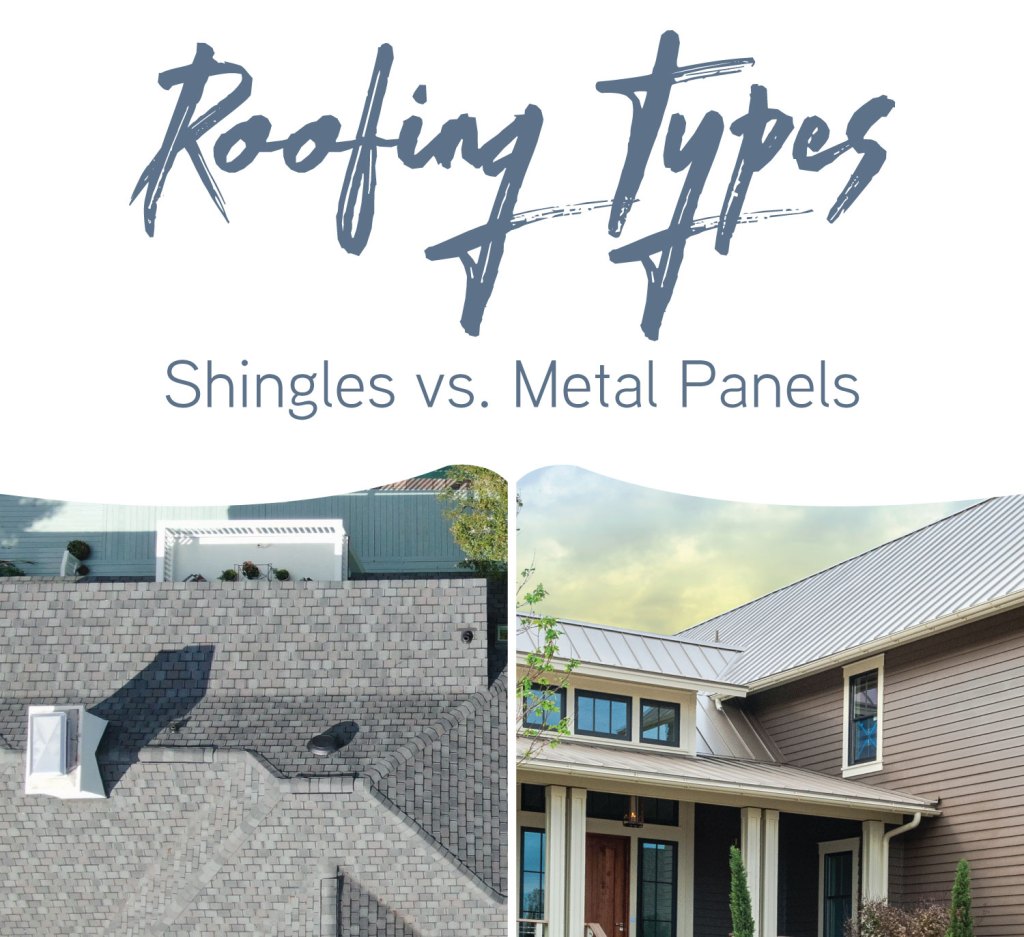
1. Roofing Materials: Shingles vs. Metal Panels
The type of roofing material you choose is one of the most significant factors in determining the cost of your new roof. Here’s a breakdown of the two most common options:
Asphalt Shingles:
Overview: Asphalt shingles are the most popular roofing material due to their affordability, ease of install, and wide range of styles, colors, and price points.
Cost: On average, asphalt shingle roofs cost between $350 and $500 per square.
Durability: They typically last 15-30 years, depending on the quality and climate.
Metal Roofing Panels:
Overview: Metal roofing is known for its durability, energy efficiency, and long lifespan. It’s a more expensive option but can be a cost-effective choice in the long run due to its low maintenance, longevity, and energy-saving properties.
Cost: A new metal roof will generally cost between $1000 and $2000 per square.
Durability: Metal roofs can last 40-70 years, making them a long-term investment.
2. Understanding Roofing Measurements: What Is a Square?
As you were reading about the cost averages of the two examples you were probably thinking what a Square of Shingles or a Square of Metal roofing is. Roofing materials are typically calculated in what’s called “squares.” A square is an industry-accepted unit of measurement in the roofing industry and equals 100 square feet of roofing material. For example, if your roof is 2,000 square feet, you would need 20 squares of material. This standard measurement helps roofers, and contractors quickly estimate the amount of material required for a project.
3. Factors That Influence Roof Replacement Costs
Several factors can influence the overall cost of your roof replacement, including:
Roof Size and Complexity:
Size: this is an obvious reason, but the total square footage of your roof determines the number of squares needed, which has a direct impact on the material and labor costs of the roofing project.
Complexity and difficulty: Roofs with multiple angles, hip-roofs, steep slopes, and 2nd or 3rd-story roofs will impact the cost vs a roof with very little complexity and is easy to access.
Architectural Features: Dormers or skylights will require more labor and specialized materials, driving up costs.
Roof Deck Condition:
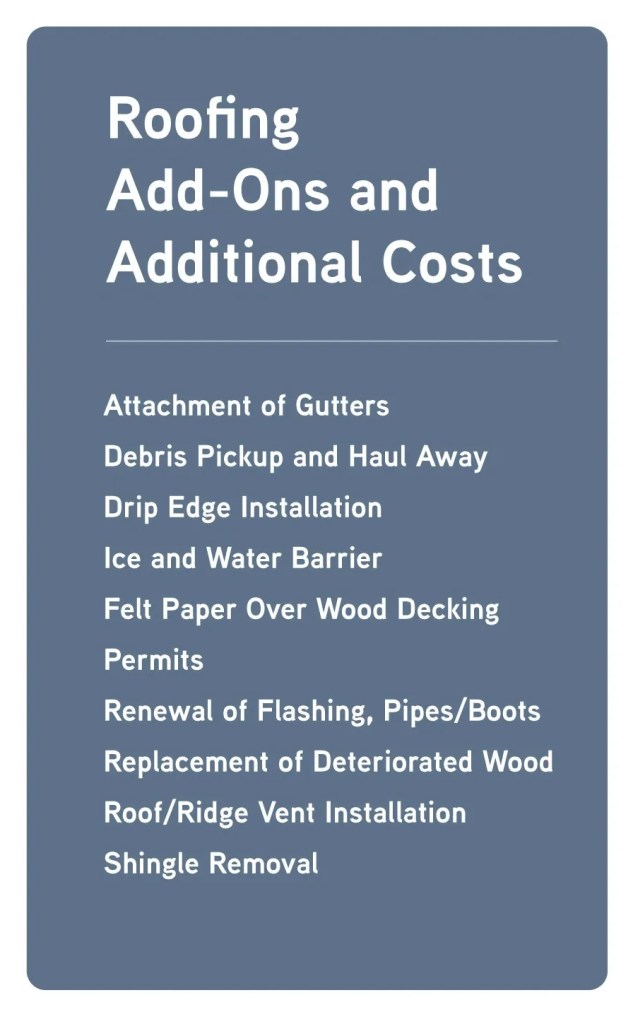
Existing Layers: If your current roof has one layer, the most respectable roofing companies will quote to remove everything on the roof down to plywood or wood roof decking before installing new materials, adding labor and disposal costs. This is the only way to ensure your new roof is installed over a sound substrate. If your roof has multiple layers of shingles, there will be additional costs for each layer of shingles the current roof has.
Deck Repairs: Any damage to the roof deck will need to be repaired before installing the new roofing system. Sometimes an older roof will have outdated ventilation system, and when removing and upgrading to a standard ridge vent, there would be holes from the old vents that need to be patched. All these instances can increase the project’s cost.
Labor Costs:
Hand Loading Shingles onto Roof: In certain markets, the shingle supplier using a boom lift truck, will load the bulk of the material onto the roof for the contractor. There are times when this is not possible, due to narrow driveways, trees, and power lines, or permission not granted to the supplier from the homeowner. Some markets are ground drop-only market, with all materials needing to be individually carried onto the roof causing a heavy labor cost to do so.
Local Rates: Labor costs vary depending on your location. Areas with higher living costs will sometimes have higher labor rates.
Installation Complexity: More complex installations, such as those involving roofing on steep, high or intricate roof designs, will increase labor costs as the level of difficulty increases.
Additional Features:
Underlayment and Ventilation: High-quality underlayment and proper ventilation are crucial for a long-lasting roof. When a roof has a section that has a 4/12 or less roof slope, roofing contractors should install an ice and water shield as an added protection on a low slope roof, but these can add to the overall cost.
Flashings, Gutters, and Other Components: Upgrading or replacing these components when doing a roof replacement project can also increase your roof replacement cost. If the Flashings are not damaged or compromised and still function as intended, the flashings don’t have to be replaced. But if they have any damage or have been modified from their original design, these would have to be replaced, causing additional costs to replace.
Code and Manufacturer Installation Requirements:
Code Issues: There are circumstances when a new code requires the roof to be installed to a standard that wasn’t the case when the older roof was first installed. These requirements can affect the plywood thickness, Amount of underlayment layers, ventilation, nailing patterns, and flashings.
Manufacturer Requirements: Manufacturers will have a standard for their shingles to be installed. Sometimes different warranties also will require certain types of products installed to qualify for the warranties.
Market Conditions:
Material Prices: Roofing material prices can fluctuate due to factors like supply chain issues or increased demand, affecting your overall cost. During Covid-19 and inflationary periods, it was very common to get materials increased prices from plywood to shingles, even the nails and fasteners increased by 20-40%. Prices did level off and in some cases come back down, but not to the levels of pre-COVID.
Seasonal Demand: Some roofing projects can cost more during peak seasons. Planning your roof replacement during the off-season may help lower costs.
Permits and Insurance:
Permits: Depending on your location, you may need permits for your roofing project, which can add to the cost.
Insurance Claims: If your roof replacement is part of an insurance claim, a significant portion of the cost might be covered by your policy. The total cost of your out-of-pocket expense would be determined by your deductible and coverage.
4. Estimating the Cost: A Price Range for Shingle and Metal Roofs
Here’s a general price range to help you estimate and budget for the cost of your new roof:
Asphalt Shingle Roof:
20-30 Square Roof (2000 – 3000 roof sqft)
- Low-End: $7,000 to $10,500 for a small, simple roof using basic 3-tab shingles.
- Mid-Range: $8,500 to $12,750 for an average-sized roof using architectural shingles.
- High-End: $10,000 to $15,000+ for a large or complex roof using premium shingles.
30-40 Square Roof (3000 – 4000 roof sqft)
- Low-End: $10,500 to $14,000 for a small, simple roof using basic 3-tab shingles.
- Mid-Range: $12,750 to $17,000 for an average-sized roof using architectural shingles.
- High-End: $15,000 to $20,000+ for a large or complex roof using premium shingles.
40-50 Square Roof (4000 – 5000 roof sqft)
- Low-End: $14,000 to $17,500 for a small, simple roof using basic 3-tab shingles.
- Mid-Range: $17,000 to $21,250 for an average-sized roof using architectural shingles.
- High-End: $20,000 to $25,000+ for a large or complex roof using premium shingles.
Metal Roof:
20-30 Square Roof (2000 – 3000 roof sqft)
- Low-End: $20,000 to $30,000 for a basic, simple roof using basic metal panels, very few trims, and exposed fastener roofing systems
- Mid-Range: $30,000 to $45,000 for an average-sized roof with mid-grade materials and panel profiles and available trims
- High-End: $40,000 to $60,000+ for standing seam, complex roofs using premium metal materials, with all available trims
30-40 Square Roof (3000 – 4000 roof sqft)
- Low-End: $30,000 to $40,000 for a basic, simple roof using basic metal panels, very few trims, and exposed fastener roofing systems
- Mid-Range: $45,000 to $60,000 for a mid to above-average-sized roof with mid-grade materials and available trims
- High-End: $60,000 to $80,000+ for standing seam, complex roof using premium metal materials
40-50 Square Roof (4000 – 5000 roof sqft)
- Low-End: $40,000 to $50,000 for a basic, simple roof using basic metal panels, very few trims, and exposed fastener roofing systems
- Mid-Range: $60,000 to $75,000 for a larger-than-average roof with mid-grade materials and available trims
- High-End: $80,000 to $100,000+ for standing seam, complex roof using premium metal materials
5. Making the Right Decision
Choosing between asphalt shingles and metal roofing panels depends on your budget, the look you’re going for, and long-term goals for your home. Asphalt shingles are a cost-effective choice with good durability, while metal roofing offers superior longevity and energy efficiency at a higher upfront cost.
At New Beginnings Construction, we’re here to help you navigate these decisions and provide you with a detailed, accurate estimate for your roofing project. If you’re considering a new roof, contact New Beginnings Construction today to schedule a free consultation.
Our experienced team will assess your needs, provide expert advice, and guide you through the entire process, ensuring a seamless and top-notch experience from start to finish.
Try Our Instant Estimator Tool
📐 Want a fast ballpark quote?
Use our free tool to estimate your remodel in under 90 seconds.
📍 Serving the Charleston Area
We remodel homes across Charleston, Summerville, Goose Creek, Mount Pleasant, Johns Island, and surrounding Lowcountry communities.
Flexible Financing Options Available
We offer affordable financing options, including 0% interest plans and staged payments. Ask us how to finance your dream remodel without the stress.
📞 Call us today or request your free consultation at nbc-sc.com
Remodeling with purpose. Built on integrity.

